A music theory book for non-musicians
The Big Scale and Chord Book
Music theory built up from a single vibrating string, and every scale and chord in every key. Everything is drawn on a keyboard and a guitar neck. You don't need to read music.
Digital Edition, US$19 · coming soon
255 pages · PDF · 8 reference pages for each of 18 roots
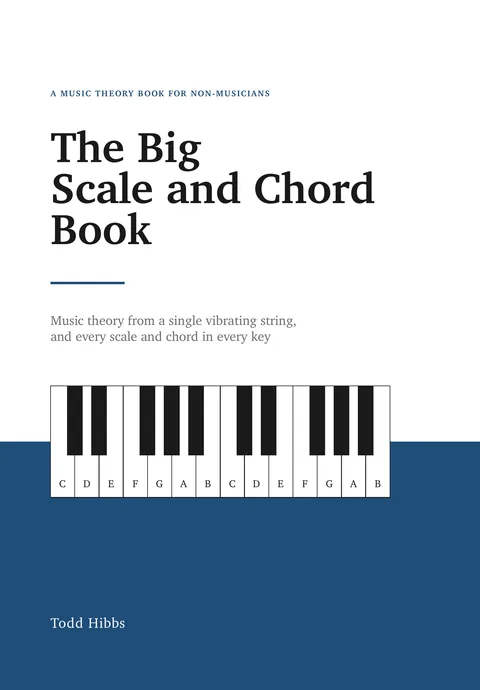
Three books in one
The narrative
Fourteen short chapters that start with one string and one question: why do some notes sound right together? Each chapter answers a question the one before it raised, until scales, chords and keys are things you understand rather than memorise. Chapters 1 to 11 each give you something to play.
The reference
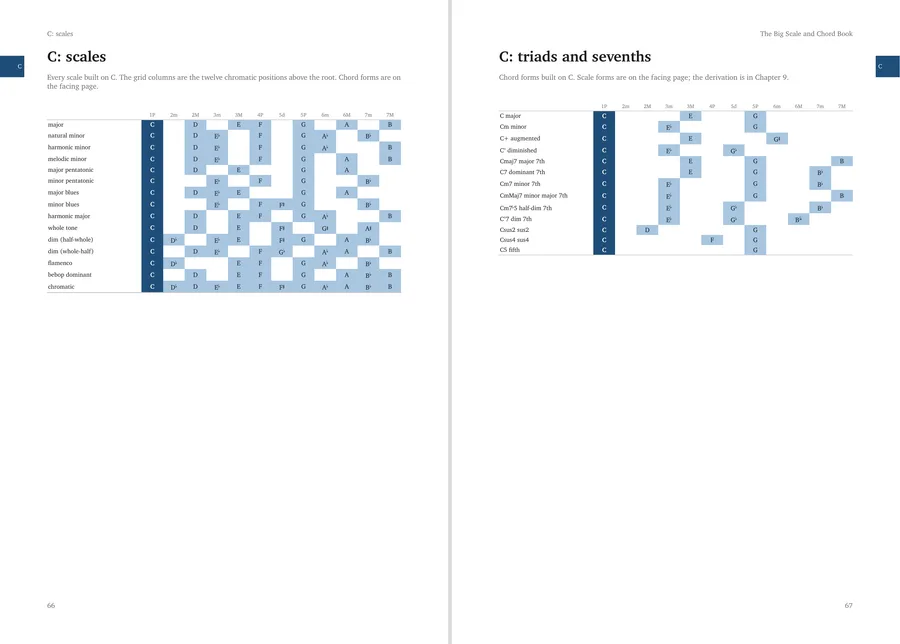
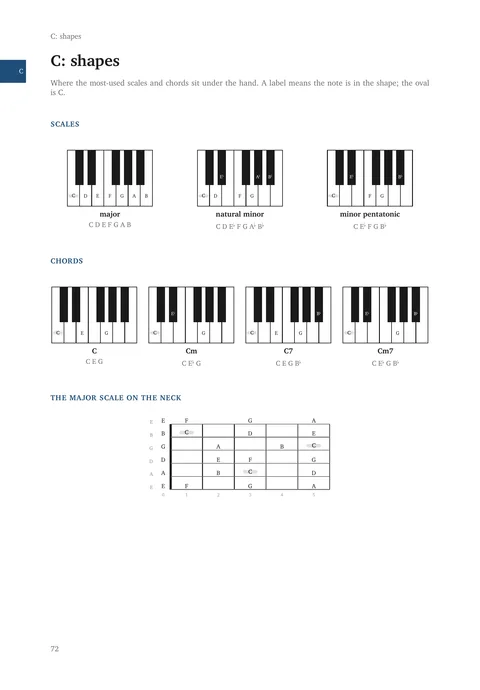
Every root gets the same eight pages in the same order: scales, triads and sevenths, modes, extended chords, the chords of the key, common progressions, and shapes for keyboard and guitar. Learn the layout on C and you can find anything for F♯.
The concepts
Twenty two-page spreads for the ideas you look up rather than read through: cadences, Roman numerals, chord symbols, inversions, modulation, tuning. Each fits on one open spread, and a glossary follows.
Inside the book
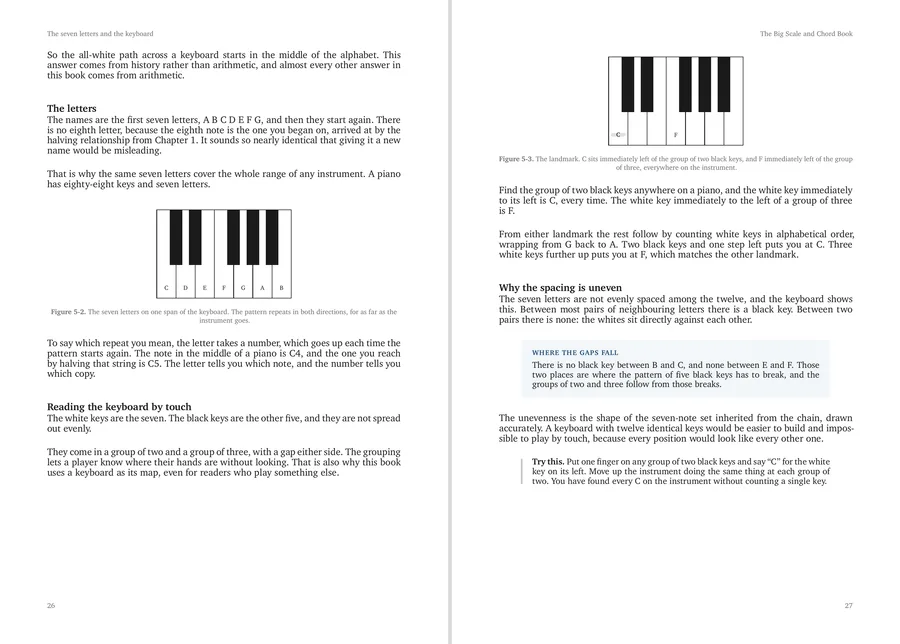
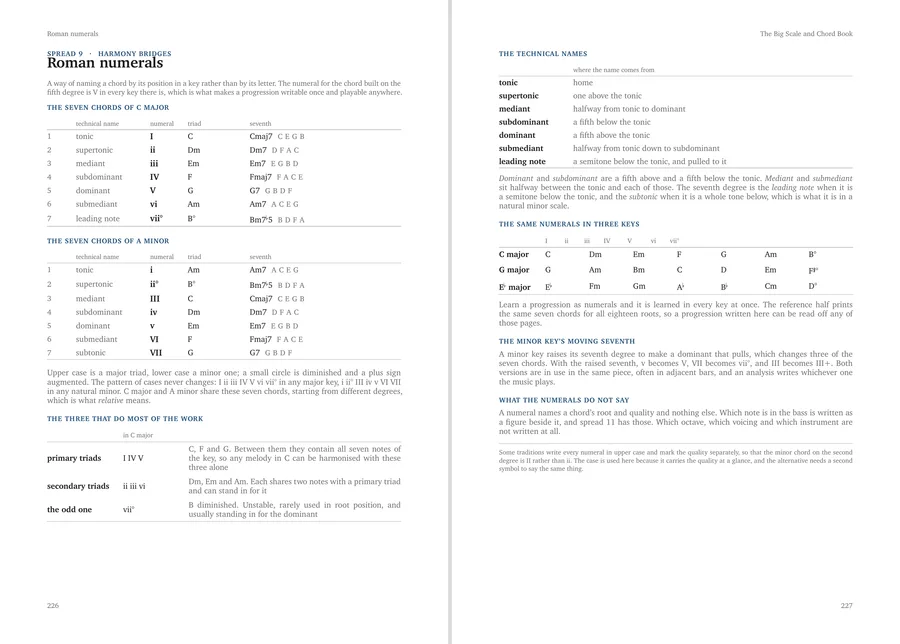
Read a free chapter
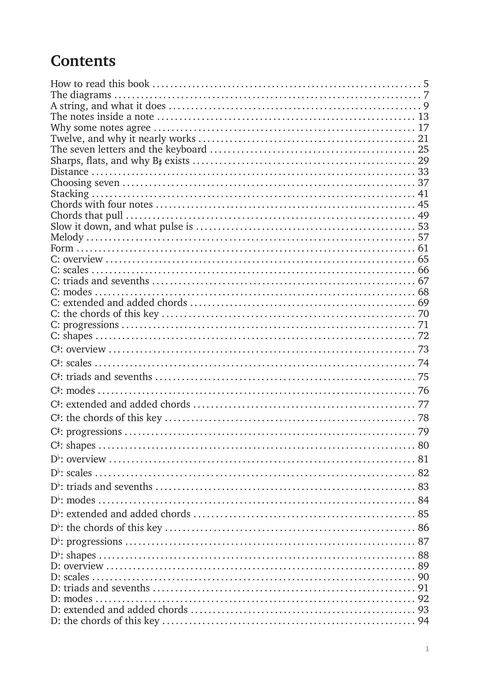
Chapter 5, where notes get their letter names and the keyboard becomes a map, plus the complete eight-page reference entry for C. It's the same PDF layout as the full book.
Thanks. Your free chapter is ready.
Download the free chapter (PDF)The link works for an hour. Fill in the form again any time for a new one.
Questions
Do I need to read music?
No. The book uses no staff notation at all. Notes are shown on a keyboard, on a guitar fretboard and by name, which is enough to build every scale and chord in it. The flip side is that it won't teach you to read sheet music; one spread shows what a staff is so you can recognise one.
What instrument is it for?
Any. The diagrams are drawn for keyboard and guitar because those make the patterns easiest to see, but the theory is the same on every instrument.
What format is the Digital Edition?
A single PDF, laid out at 7 × 10 inches like a printed book, in colour, with a linked contents page and bookmarks. It isn't a reflowing ebook: the diagrams need the page to stay as designed.
What can I read it on?
Anything that opens a PDF. A tablet or a computer screen shows a full page comfortably; on a phone you'll be zooming. You can print pages for the music stand.
What if it's not for me?
Email support@musictheorybook.net within 30 days of buying for a full refund. No questions.
Is there a print edition?
Not yet. A paperback is planned. If you'd like to hear when it's out, the free chapter form above is the way to find out.